
How to lay laminate flooring
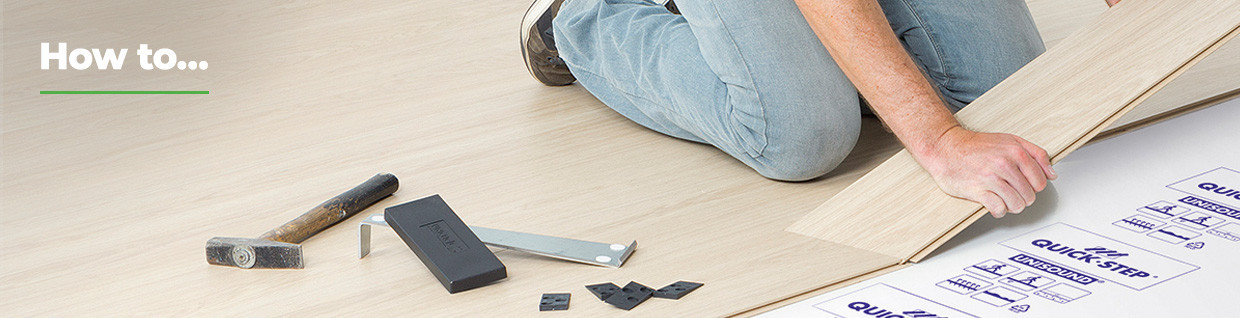
Modern laminate flooring is quickly becoming a popular option for homeowners. It's durable and long-lasting, with a wide range of styles and colours to select from. This sort of flooring is simple to maintain and is perfect for locations with a lot of foot activity. Although installing laminate flooring is quite straightforward, being cautious and thorough with your preparation is essential for if you want to avoid complications in the future.
So therefore, we will provide you with as much guidance and information as possible to make the process of laying laminate flooring much easier for you.
Laminate flooring brands and types
At Howarth, we offer a range of stylish and durable laminate flooring, including the popular Quick-Step brand. Quick-Step has over 25 years of experience, features an easy click-fitting system, is scratch-resistant, and comes in a wide variety of styles, sizes, and colours, including several oak options like classic natural, light grey, warm desert, and soft light oak.

Herringbone laminate flooring
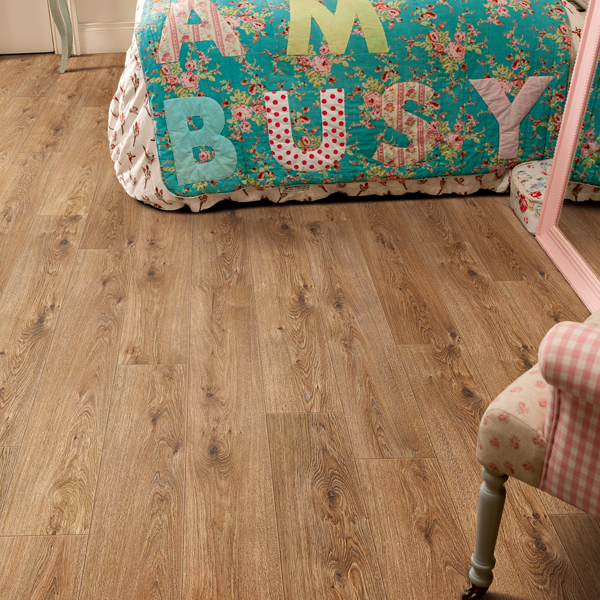
The herringbone pattern is a classic, elegant choice for hallways or living areas. Laminate herringbone flooring offers the look of real wood with added affordability, durability, and easy maintenance. To install, choose the right material and prepare the area with a subfloor.
Do I need an underlay for laminate flooring?
A laminate underlay is essential over concrete or wood sub-floors, offering noise reduction, thermal insulation, comfort, and longer flooring life.
Fibreboard underlay works well on timber, hiding small uneven spots and providing heat insulation. Over concrete, use a damp-proof membrane like foam; fibreboard can still be used with an extra damp-proof layer. Always follow the manufacturer’s instructions and let the underlay acclimate to the room before installation.
How much laminate flooring will I need?
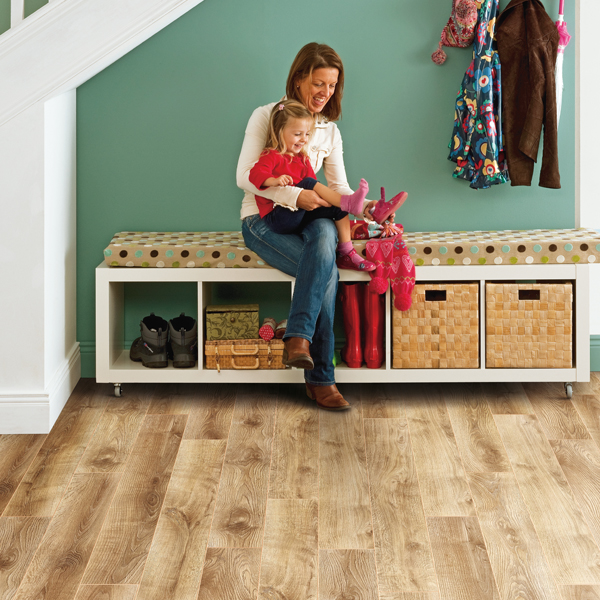
To calculate packs, multiply your room’s length by width to get m², then check the pack coverage and add 10–15% for cuts and waste. Allow unopened laminate packs to acclimate for at least 48 hours, avoid stacking more than three high, and create gaps between packs for air circulation.
How to lay a laminate floor
When installing laminate on concrete or a new subfloor, you can lay boards in any direction, though laying towards light can make joins less noticeable. Plan your layout to determine row placement and avoid very thin edge boards. Leave a 10–12mm expansion gap around the room for natural movement. Start the first row in a corner of the longest wall and work back, covering the expansion gap with skirting or laminate beading.

What tools do I need to lay laminate flooring?
To begin fitting laminate flooring, you will need the following tools:
- Your choice of laminate flooring and underlay
- Stanley knife
- Hammer
- Protective gloves
- Drill
- Tape measure
- Gaffa tape
- Spirit level
- Clamp
- Circular saw or hand saw
- Flat wood drill bit
- Pulling ledge
- Threshold
- Optional – beading/trim

How to fit laminate flooring
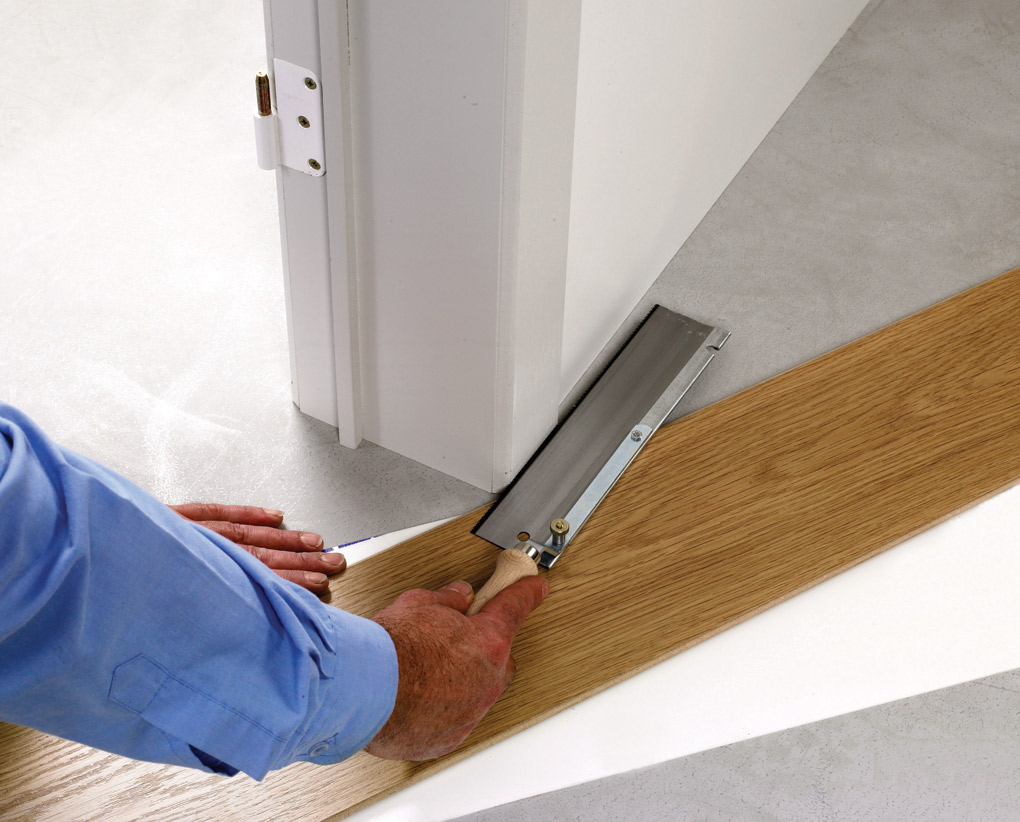
Before you begin fitting your laminate flooring, make sure you have removed any doors before you fit the flooring, as you will need to cut into the architrave.
Step 1 - Line up a floorboard offcut
First begin by lining up a floorboard offcut with the architrave, and then trim the architrave using a panel saw so that the floorboard may fit beneath. Then remove the extra wood with a hammer and chisel.
Step 2 - Prepare floor and underlay
After that, ensure that the floor has been properly prepared, and that the underlay is in place. Begin by laying the first piece of laminate with its tongue edge against the longest wall's corner.
Step 3 - Placing in spacers
Then, between the wall and the board, add 10-12mm spacers to provide the expansion gap. Place a pair of spacers along the length and one across the breadth of the board.
Step 4 - Lining up the boards
Line up the end of the next board with the end of the first and click it into place. You want the first row to be precisely straight, so make sure the alignment is flawless. Maintain the expansion gap by using spacers and repeat this process until you can’t lay any more full boards.
Step 5 - Prepare the last board
The last board will need to be trimmed to suit the space at the end of the row, so next to the row you've just finished, lay a whole board down. Turn the board over so that the groove edge is facing you.
Step 6 - Mark the last board for trimming
On the bottom of the board, measure and mark a cutting line. Then secure the board in a workbench and cut with a jigsaw or panel saw. To finish the first row, place the board in place.
Step 7 - Starting the second row
Start the second row with the offcut from the first row if it’s at least 300mm long—never use a full-length board. Stagger all joints for stability and appearance, and use a spacer at the start of each row before continuing to lay the boards.
Step 8 - Slotting the boards in
Place a spacer against the wall to begin the second row, then insert the tongue edge of a fresh board into the groove edge of the preceding row. From a 20-30 degree angle, slot the board in. Make sure the board's end is flush with the wall spacer.
Step 9 - Laying all the floor
To ensure that the tongue and groove system clicks into place properly, line up the next board and press it into place using the same way. Continue working your way down the row, repeating until you reach the edge row.
It's possible that you'll have to trim the boards to fit the gap in the last row, but this will have been decided when you laid up the plan. In that situation, take a measurement of the distance between the last full row and a spacer. Cut the board to size and lay it down as you normally would and remember to provide space for expansion!
How to cut laminate flooring
Installing laminate is doable for handy homeowners, but cutting boards takes practice. Straight cuts usually require a circular saw, though a handsaw can work for simpler jobs. Scroll to Step 1 to learn how.
1: Use a circular saw or a handsaw with at least 18 teeth per inch to avoid chipping it
2: Mark the line on the laminate flooring
Mark the laminate where you need to cut, either on the edge or with a chalk line across the surface. After cutting, simply wipe away the chalk.
3. Leave the laminate facing right-side-up and cut it with a circular saw or handsaw
Always remember when cutting laminate to always check your measurements multiple times throughout your project because rooms are usually not perfectly square!
If you have any more questions about laminate flooring, or would just like to discuss your options, you can contact our customer services on the number 01472 907051.
Recent Posts
-
Different Species of Timber used for Fences
Choosing the right fencing timber is one of the most important decisions you’ll make when planning a
-
Is LVT Flooring better than Laminate Flooring?
When it comes to choosing new flooring for your home, two popular options often come up: laminate fl