
How to paint skirting boards

Painting skirting boards may not be your first choice of DIY project, but it's a simple task that can make a huge difference to the overall appearance of your home. Freshly painted skirting boards can instantly brighten a room, cover scuffs and marks, and create a clean, professional finish.
Whether you're painting brand-new skirting boards or refreshing existing ones, this guide will take you through the process step by step.
How to clean skirting boards before painting
When it comes to painting skirting boards, preparation is key. Use a sponge and warm soapy water to wipe down the boards and remove any dust, dirt, or grease that may affect the finish.
Allow the skirting boards to dry completely before moving on to the next stage.
Sanding the skirting boards
Once dry, lightly sand the surface using sandpaper or an electric sander. Always sand with the grain of the wood to achieve a smooth finish and help the paint adhere properly.
After sanding, wipe away any dust with a damp cloth. Wearing a dust mask is recommended, particularly when using power tools.
If you have MDF skirting boards, you can skip the knotting solution stage. However, natural timber skirting boards often contain knots that can show through paint if left untreated.
Apply two or three coats of knotting solution to any visible knots before painting. This is especially important when working with pine skirting boards, which tend to have a more pronounced grain pattern.
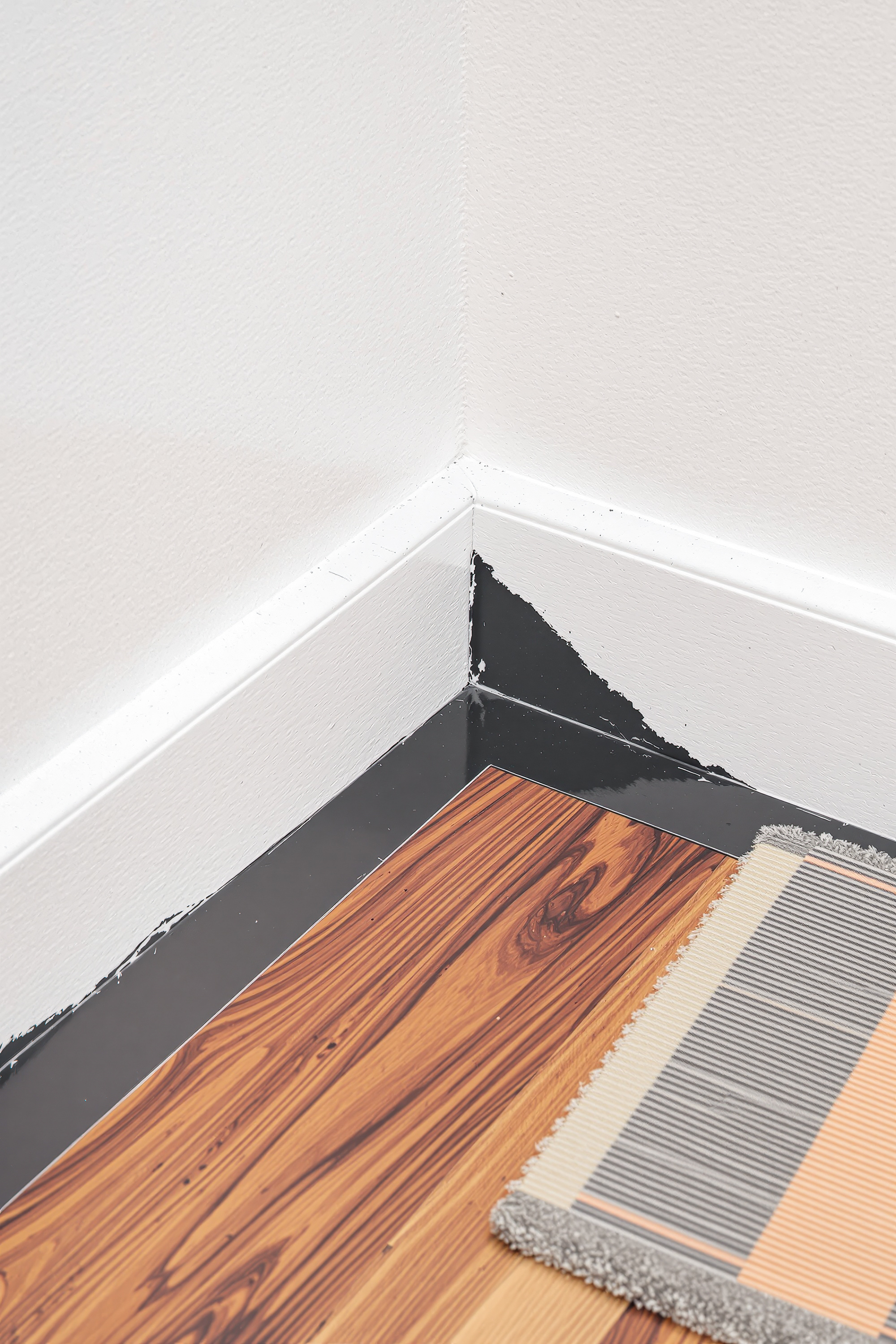
How to protect your carpet and walls when painting skirting boards
One of the biggest concerns when painting skirting boards is avoiding accidental paint splashes on carpets, flooring, or walls.
To protect your flooring, place self-adhesive floor protector or dust sheets as close to the skirting board as possible.
For walls, apply painter's tape along the top edge of the skirting board. This helps create a crisp line and prevents paint from transferring onto wallpaper or painted surfaces.
Do I need to prime my skirting boards?
If you're working with new timber skirting boards that haven't been pre-primed, you'll need to apply one or two coats of primer before painting.
If your skirting boards have already been painted or are supplied ready-primed, you can usually skip this stage.
Allow the primer to dry fully before applying your chosen paint for skirting boards.
What is the best paint for skirting boards?
Choosing the best paint for skirting boards depends on the finish you're looking for, and the level of durability required.
Popular options include:
- Satinwood paint for a smooth, low-sheen finish
- Gloss paint for a high-shine, durable surface
- Eggshell paint for a softer, contemporary appearance
When selecting skirting board paint, look for products that are durable, easy to clean, and resistant to scuffs and knocks.
If you're wondering what paint for skirting boards is best, satinwood is often the most popular choice for modern homes due to its balance of durability and appearance.
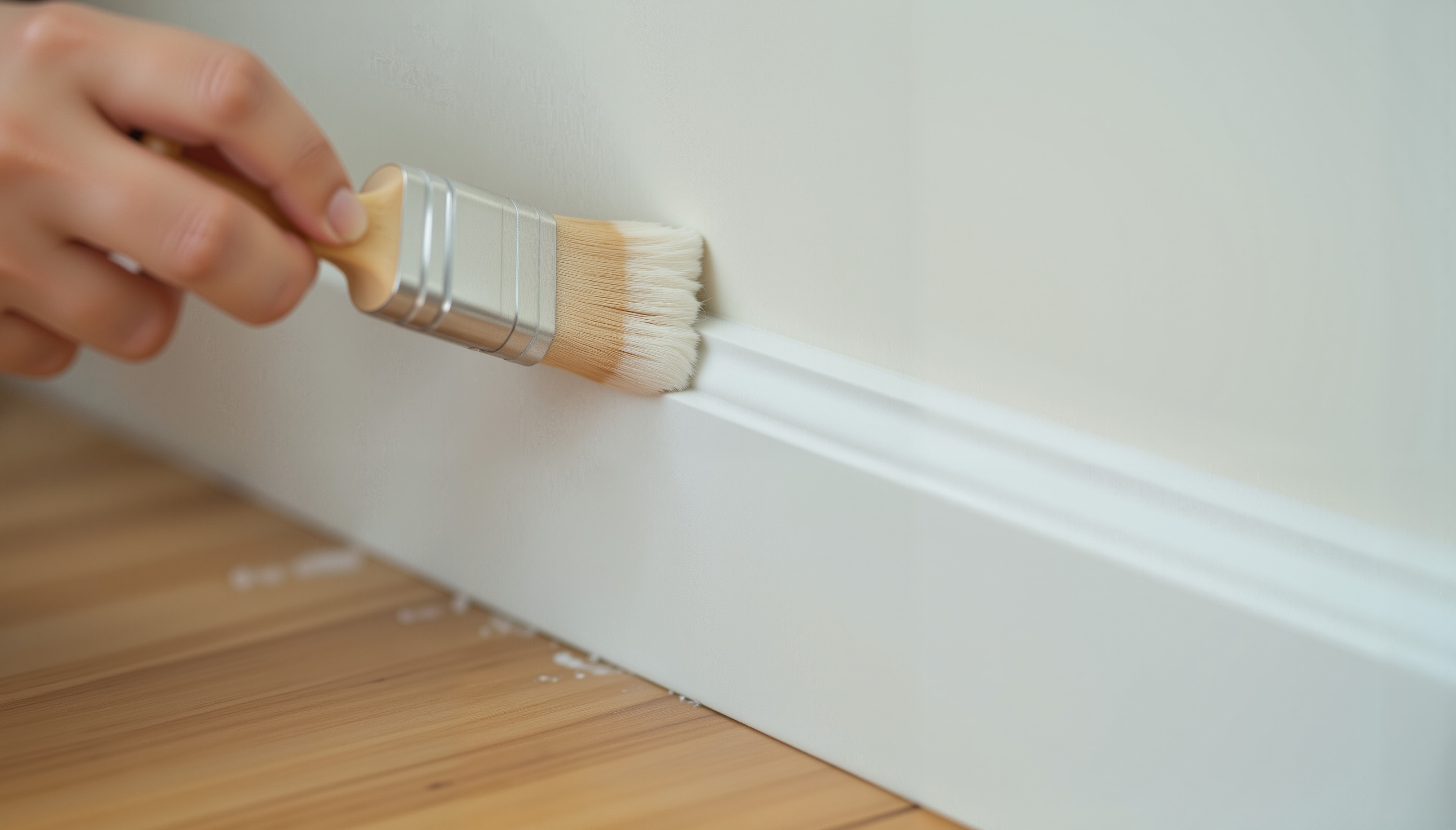
Step-by-step guide to painting skirting boards
Now that you've completed the preparation, it's time to start painting.
Step 1: Paint the top edge
Using a 2-inch paintbrush, load one side of the brush with paint and remove any excess against the inside of the tin.
Hold the brush at a slight angle and carefully paint along the top edge of the skirting board. Work in manageable sections and smooth out any drips immediately.
Step 2: Paint the bottom edge
Next, paint along the bottom edge of the skirting board.
Take extra care around flooring, as even with protective coverings there may be small gaps where paint could seep through.
Step 3: Paint the middle section
Once the edges are complete, fill in the centre section using smooth, even brush strokes.
Most painted skirting boards require two coats to achieve an even, professional finish. Allow each coat to dry fully before applying the next.
Make sure the entire profile of the skirting board is covered evenly.
Step 4: Finishing touches
Once you've finished painting, carefully remove the painter's tape from the wall while the paint is still slightly wet. This helps prevent the paint from lifting or cracking.
Leave floor protection in place until the paint is completely dry.
For the best results, wait at least 12 hours or overnight before moving furniture back into position.

Paint walls or skirting first?
A common decorating question is whether to paint walls or skirting first.
Most decorators recommend painting the walls first, followed by the skirting boards. This allows you to cut in neatly and avoid damaging freshly painted woodwork while decorating the walls.
Do you paint skirting boards before walls?
While some people prefer to tackle woodwork first, the general recommendation is to paint the walls before the skirting boards.
If you're wondering, "Do you paint skirting boards before walls?", the answer is usually no. Painting the skirting boards last helps achieve a cleaner, sharper finish.
What paint for skirting boards should I choose?
If you're unsure what paint for skirting boards to use, satinwood and gloss are both excellent options. Satinwood provides a modern finish, while gloss offers maximum durability and shine.
The best paint for skirting boards will depend on your home's style and the level of wear and tear the boards are likely to experience.
If you have any more questions about how to paint skirting boards, or you just need additional information about the products we sell at Howarth, please visit your local Howarth branch, or contact us today on our customer services on 01472 907051.
Recent Posts
-
10 Garden edging ideas to transform your outdoor space
A beautiful garden isn't just about the plants you choose - it's also about how you frame them. Gard
-
How to Lay Sleepers for Garden Edging
Adding sleeper garden edging is one of the easiest ways to create structure, define borders, and enh