
How to prepare fencing for bad weather
As landscaping season comes to an end and colder, wetter weather sets in, it’s important to make sure to protect your wood fence from harsh weather for the months ahead. Replacing or repairing damaged fencing can quickly become costly, so taking a few simple steps to prepare and strengthen your fence can help protect it throughout the winter.
In this article, we’ll look at how to protect a wood fence from bad weather and the steps you can take to help it withstand strong winds!
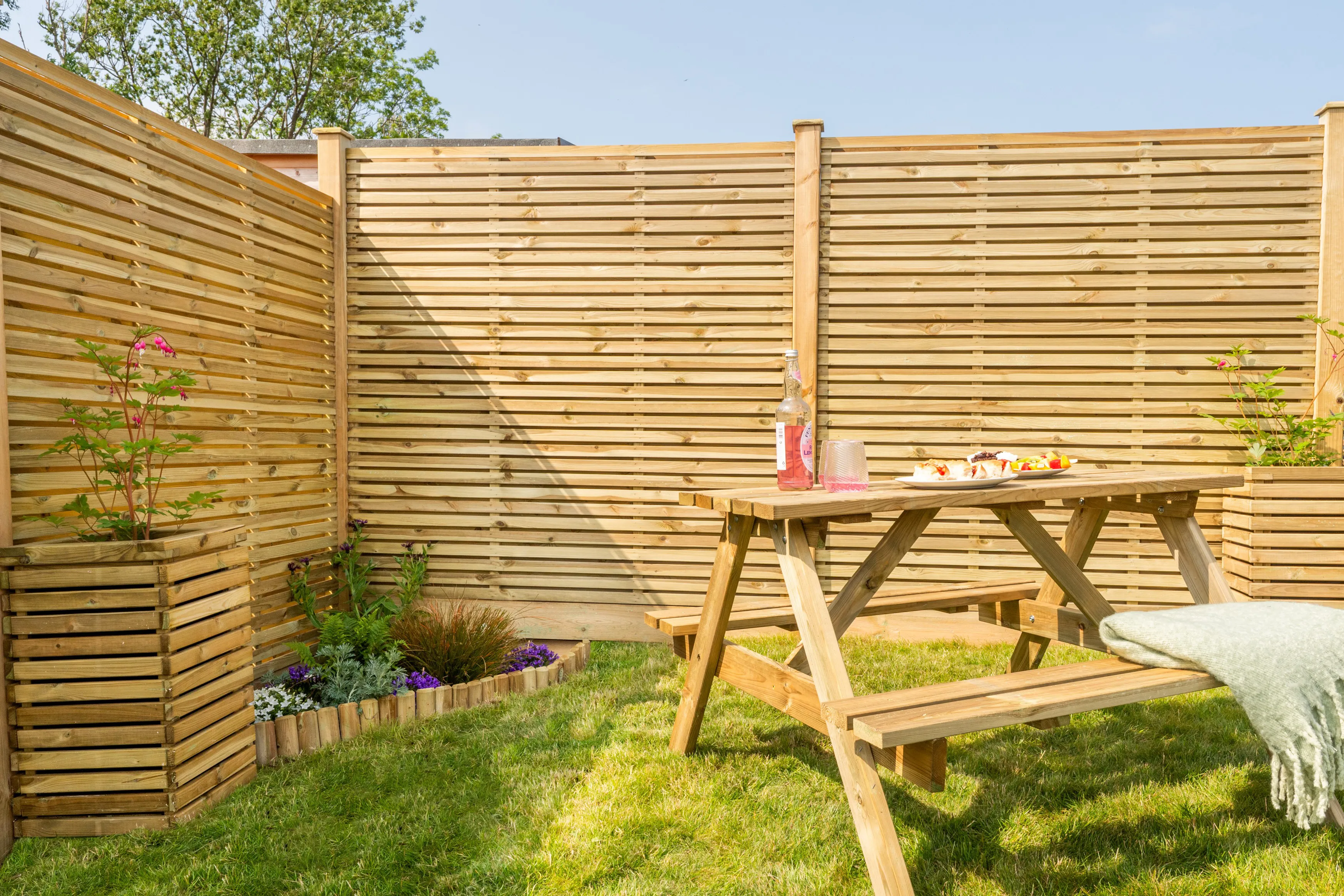
How much wind can a fence withstand?
There is no universal figure for how much a fence can withstand. Wind performance depends on height, panel design, post depth and spacing, materials, exposure, and overall condition. Wind failures usually start with movement: loose fixings, tired posts, shallow footings, or water-softened ground.
Before storm season, walk the fence line and check for:
- Posts that move when pushed firmly
- Panels that rattle, lift, or sit loosely
- Split or sagging rails
- Rot at ground level (especially timber)
- Rusted brackets, screws, bolts, hinges, and latches
- Erosion or voids around post bases
- Heavy ivy or shrubs adding weight and wind resistance
- Gates that swing or slam in gusts
If anything is loose in calm weather, it is unlikely to hold up in strong gusts.
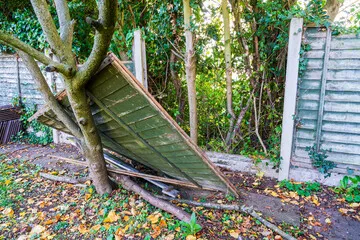
What are the best materials for windproof fence panels?
Unfortunately, no fence is completely windproof in every setting. A better target would be wind resistant fence panels that reduce wind load, shed water, and pair with appropriately sized posts and fixings. In windy gardens, designs that allow airflow usually outperform solid ‘sail’ panels.
Slatted timber panels
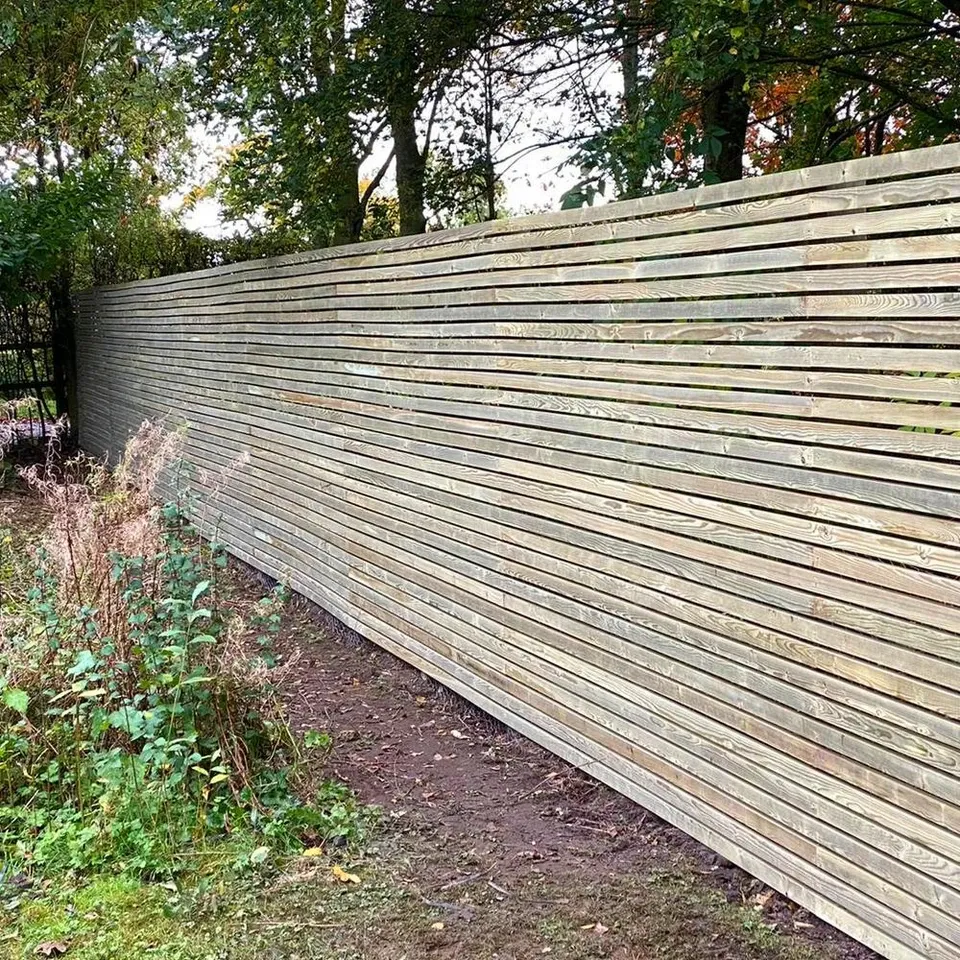
Slatted timber can deliver a wind proof fence appearance while letting air pass through. That reduces pressure on posts and rails while maintaining privacy. Choose pressure-treated boards and keep the bottom edge away from constant damp with a gravel board and good drainage.
Composite fencing
Composite products are often marketed as the best weather resistant fencing for your garden because they fight against rot, insects, and warping better than untreated timber. Many composite panels are heavier, so follow the manufacturer’s post sizing, spacing, and fixing guidance. In exposed areas, slatted composite designs are typically more forgiving than tall solid panels.
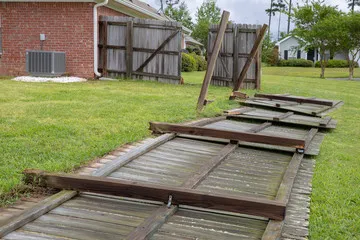
How to strengthen a fence against wind
If you want to know how to strengthen a fence against wind, start by removing movement. Gusts manipulate looseness, and repeated rattling can enlarge screw holes, split timber fibres, and loosen brackets.
- Prioritise posts first. If a post is rotten at the base or the footing has shifted, extra screws in the panel will not solve the core problem.
- Upgrade fixings. Replace rusted nails with exterior-grade screws/bolts and appropriate brackets.
- Stop panel lift. Add panel clips/brackets so panels cannot bounce or rise in gusts.
- Repair rails. Replace split, bowed, or loose rails so loads distribute properly.
- Use gravel boards. Keep timber away from wet soil and add stability along the base.
- Improve drainage. Prevent standing water around post bases to slow rot and soil softening.
- Reduce wind drag. Trim heavy climbers and shrubs that add weight and catch gusts.
- Reinforce gates. Fit strong hinges, a reliable latch, and a drop bolt where needed.
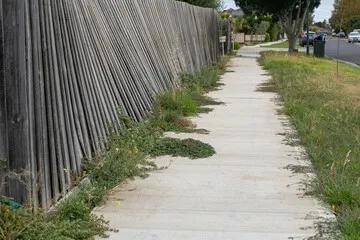
How to brace a fence against wind
How to brace a fence against wind depends on whether you need a temporary hold or a longer-term repair. Bracing works by shifting load away from the weak point and limiting sway.
Temporary bracing: Fix angled timber supports from a leaning post down to a secure ground point on your side of the boundary. The brace needs a firm anchor (not soft soil) and should oppose the likely fall direction.
Longer-term bracing: Consider repair spurs, additional posts to reduce span, or stronger rails. If the site is consistently exposed, switching a problem section from solid panels to slatted or mesh designs can reduce wind pressure more effectively than repeated bracing.
How to secure a fence in high winds
If you are looking for how to secure a fence in high winds, focus on preventing lift, swing, and repeated impact. Panels in slotted posts can rattle upward if not retained, and gates can behave like large moving panels if latches fail.
Latch, lock, or bolt gates so they cannot blow open repeatedly
Add a drop bolt to larger gates
Remove temporary screening, tarps, decorations, and anything that catches wind
Move bins, furniture, and planters away from fence lines
Tighten clips, screws, and brackets; replace any that are stripped
Does home insurance cover fence damage from wind?
It depends a lot on your policy terms, the cause of the loss, and whether the fence was reasonably maintained. Some policies cover storm damage to fences and gates; whereas others exclude them or limit payouts.
If damage happens, take a picture of everything, make the area safe, keep receipts for emergency work, and contact your insurer for next steps. If the fence was already rotten or leaning, coverage can be harder to justify, which is another reason to keep basic maintenance documented.
A practical bad-weather fence checklist
Inspect the full boundary for movement, rot, and loose panels
Tighten or replace fixings; add clips to stop rattling and lift
Reset or replace weak posts; address drainage at post bases
Trim climbers and overhanging branches
Secure gates with solid latches, hinges, and drop bolts
In exposed areas, consider slatted, mesh/metal, composite slats, or well-built closeboard options
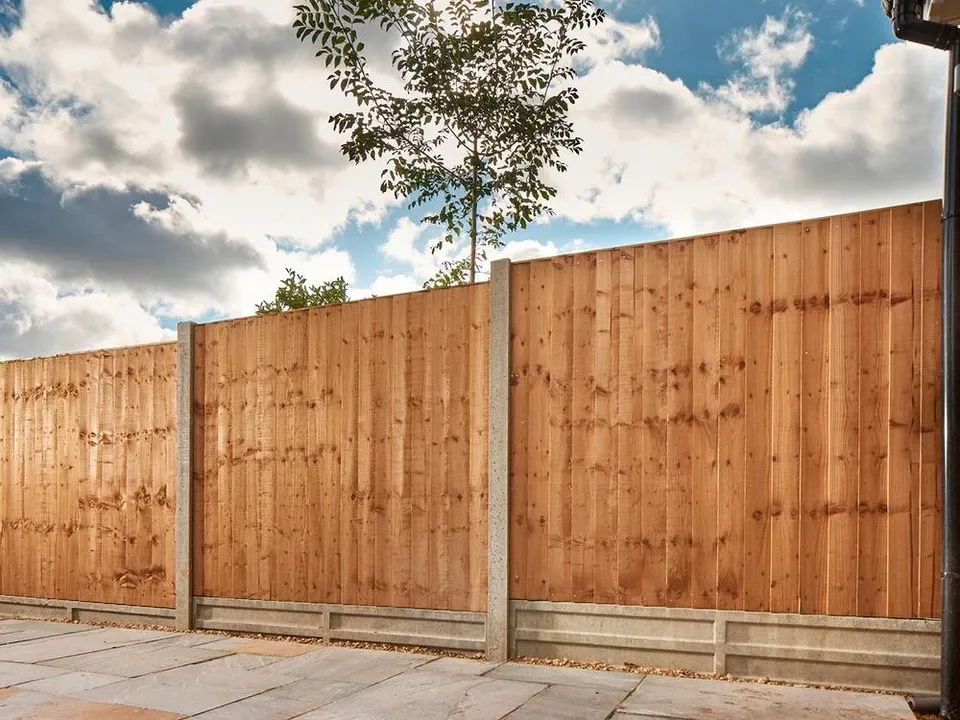
Preparing fencing for bad weather comes down to reducing wind pressure, removing movement, and preventing moisture damage that undermines posts and fixings. In exposed gardens, wind proof fence panels - such as slatted timber and composite boards - often hold up better than fully solid panels.
Ultimately, no wind proof fence is guaranteed, but a well-supported, well-maintained fence is far more likely to stay upright when conditions change for the worse!
We hope this article has helped you get a better understanding of the how to prepare your fencing for bad weather. If you'd like to learn more about the range of fencing at Howarth, visit your local Howarth branch or contact our customer services team on 01472 907051.
Recent Posts
-
How to prepare fencing for bad weather
As landscaping season comes to an end and colder, wetter weather sets in, it’s important to make sur
-
UK Door Sizes
In the UK, there are various typical door sizes, and knowing measurements can be difficult and confu