
There are no products listed under this category.
Underfloor water heating
Underfloor heating is a hidden system installed beneath a floor to warm a room from the ground up using radiant heat.
How does underfloor water heating work?
- Traditional kinds of radiators heat the air nearby, which creates currents that can leave cold spots.
- Underfloor heating turns the entire floor into a gentle, wide-spanning radiator that directly warms people and objects.
- The system operates at lower temperatures than standard radiators while providing an even, comfortable room temperature.
How do underfloor water heating systems work?
There are two kinds of underfloor heating, which are electric and warm water, and both work in a very similar way.
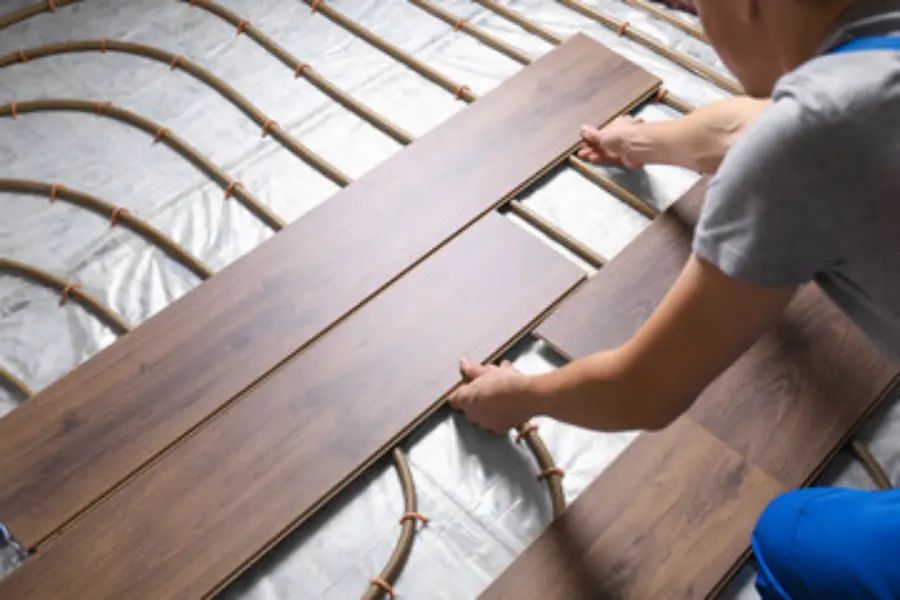
A network of pipes (for warm water systems) or electric cables (for electric systems) are laid under the floor, and when the system is switched on, the pipes or cables warm up and heat the floor’s surface, providing radiant heat that warms the room from the ground up!
How energy efficient is underfloor heating?
Technically speaking, most underfloor heating systems are much more efficient than radiators due to how the heat is emitted more evenly around the room. The heat also comes from a large surface area - which means it can work with water at much lower temperatures.
As for electric underfloor heating, it can be considered less efficient than water due to how electricity is less efficient at heating than gas. This could then mean that running costs are higher, but, it's a much more efficient way of heating a single, small room due to its independent usage.
Ultimately, overfloor heating efficiency depends on a lot of factors, such as how well insulated the room is, the overall size of the room, and the type of flooring that's used.
What flooring works best with underfloor heating?
Stone, porcelain tiles, LVT and engineered wood are the best overall flooring choice for underfloor heating because they have the highest thermal conductivity and transfer heat quickly.
Avoid using solid hardwood and carpets, as this can be prone to warping and cupping, and can also act as an insulator to trap heat beneath the floor.
We have a wide range of online products that you can view on our website, and if you have any further questions, you can visit your local Howarth branch.
Frequently Asked Questions
How to Guides
Underfloor Heating Guide
Underfloor heating is suitable for timber frames, solid floors and joisted systems.